Training and capability
Learning programs from general managers to planners and execution teams. The aim is to change how people think about defects, not only what procedures they follow.

Every machine leaves the factory with a reliability code built in. It loses that code through four gates: how it is operated, how it is maintained, the environment it runs in, and the systems connected to it. For 45 years my work has been about closing those gates early, while it is still cheap to do so.
Most improvement work starts after something has broken. We find the failure, repair the symptom, and add another inspection. The plant gets a little better and the maintenance load keeps growing.
The best maintenance is the maintenance you never need to do.
A defect is the root cause that, left alone, will lead to loss. It is not the failure and it is not the symptom. Defect elimination means finding and removing those causes before they show up on any monitoring trend.
The Gateway Process turns that thinking into an asset strategy. It underpins every training program, investigation and strategy I deliver.
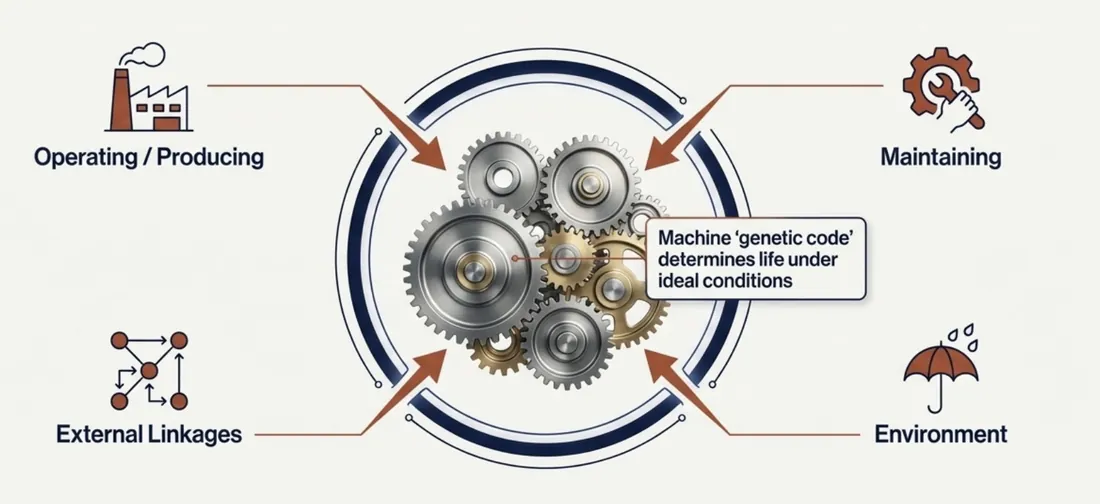
Equipment run without due care, or driven outside its design limits.
e.g. overloading, rapid starts, running past alarmsPoor planning, imprecise work, the wrong tools or procedures.
e.g. misalignment, wrong lubricant, rushed reassemblyThe conditions the asset lives in, inside and around it.
e.g. dust ingress, moisture, heat, contaminationDefects arriving from outside the owner's direct control.
e.g. design, spares quality, power, air and fluid supplyAcross Gateway projects, asset owners expected the maintainers to own the problem. The analysis said otherwise: two thirds of root causes came through the external and operating gates. Only a holistic strategy closes all four.
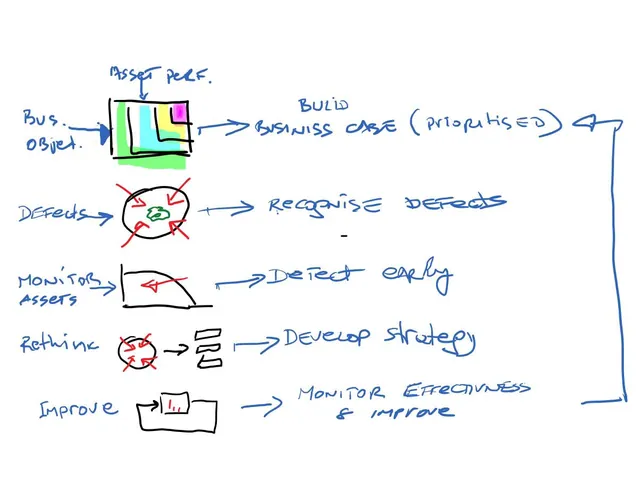
The whole method fit on one page before it had a name. Two decades later the loop is the same.
↺ then back to step 01
I work mostly remotely with short site visits, alongside your maintenance, reliability and operational readiness teams.
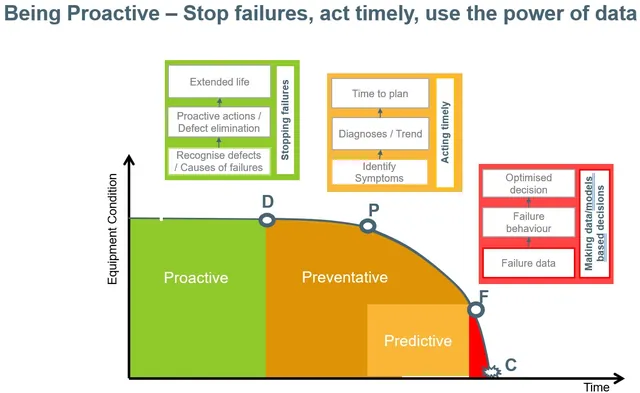
Managers, reliability engineers, planners and execution teams each see how their work fits, so the most value is drawn from the asset across its whole life.
Learning programs from general managers to planners and execution teams. The aim is to change how people think about defects, not only what procedures they follow.
Gateway-based strategies for greenfield and brownfield sites, built with operators, maintainers and engineers in one team and recorded in eGateway.
Focused reliability improvement on what matters most: critical assets and systemic problems. Discover, rectify and make it common practice.
Condition monitoring program design and review, vibration analysis and data analytics to show where your fleet really stands, with the CM strategy implemented in VibCloud.
Solving complex, tough, sporadic or chronic problems on critical equipment and processes, including field testing, when the obvious answers have run out.
Structured investigation that removes the cause rather than the symptom, so the same defect does not return somewhere else in the plant. RCA.Cloud makes it a sustainable everyday practice.
I designed the processes. With iTnnovate, the company I co-founded, we turned them into web tools now supported for clients around the world.
Build Gateway asset strategies, keep the decision trail when people change, and maintain one live strategy document aligned with your ERP.
Visit iTnnovate ↗Vibration analysis and inspection management that scales from a single site to a global fleet, with advanced diagnostic features in active development.
Visit VibCloud ↗Guides teams through structured root cause analysis and tracks actions until the defect is gone for good.
Visit iTnnovate ↗Not sure which tool fits? Describe the problem and I will point you to the right one, or tell you if a tool is not the answer yet.
Client names are kept confidential. These are measured results from real projects. Case studies are in the library.
Defect elimination on conveyor drive pulleys cut uncredited failures by 93%.
Workshop quality checks for new and overhauled gearboxes reduced warranty claims by 90%.
After Gateway actions on a scalper line, the gains held even after the project team left site.
Typical improvement range on critical assets once defects are addressed across all four gates.
From turbine diagnostics in Macedonia to global asset management practice, R&D and university commercialisation.
Chief Engineer for efficiency monitoring, analysis and diagnostics. Equipment and process performance testing and improvement, dynamic balancing and early predictive maintenance.
Built and led the condition monitoring and diagnostics team, serving BHP operations in Australia and abroad.
Built and led the global SAMS practice. Invented the Gateway Process in 2004, co-wrote the Gateway book in 2006 and later received Hatch's Global Innovation Award for it.
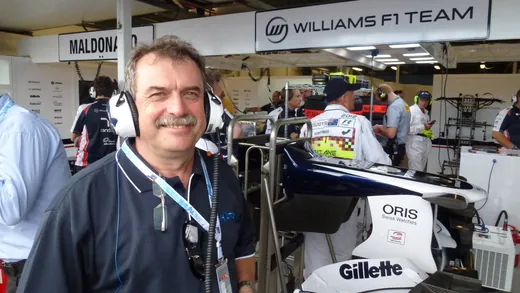
Two years delivering defect elimination training with the Williams F1 team, linking race car performance to maintenance performance in heavy industry.
Machine dynamics lead on thin strip casting for Nucor and BSL. More than ten patents as inventor and a PhD from the University of Wollongong, completed at 50.
Led operational services in asset management, then innovation and technology for operational performance, worldwide.
Turned the Gateway Process, asset health monitoring best practices and the RCA process into eGateway, VibCloud and RCA.Cloud tools for sustainable deployment.
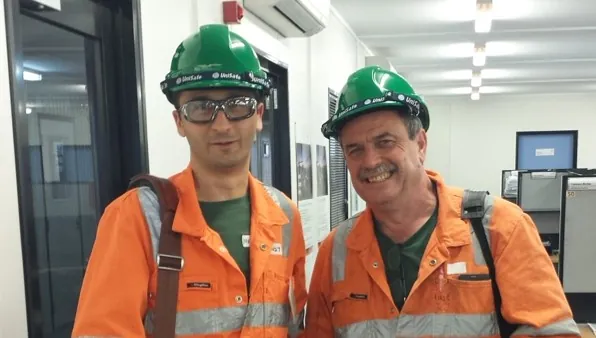
Part-time role in the Value Engineering team, applying data analytics to asset and engineering decisions.
Capability development and mentoring, maintenance academies, reliability programs and technical investigations for mining, utilities and heavy industry.
Helping take award-winning Sustainable Materials Research & Technology from the lab into operation and commercialisation.
Short lessons from 45 years of field practice. Each one gives you an idea you can use on site this week.
A defect is a lack of something, or an imperfection, that will lead to a failure. It is not the onset of the failure, and it is not the failure itself. It is often invisible at first and it is not the symptom a vibration trend picks up.
So when we talk about defect elimination, we mean finding and removing potential and actual root causes before they become problems and lead to loss. Fixing what has already broken is problem solving. That matters too, but it is a different job.
From Gateway Asset Strategy for Defect Elimination, updated edition in progress.
When a failure repeats, the usual reaction is a new inspection. In Gateway projects, a large share of root causes were removed simply by getting the scope and quality of repair work right: correct fits, clean assembly, proper alignment, the right parts.
Before you add another check to the route, ask how the last repair was done. Inspection finds defects after they are in. Precision work stops them getting in.
From Tips for Better Maintenance.
A simple guide to understanding vibration. Part 1 answers three questions: what is vibration, what is a time waveform, and what is a spectrum?
I designed VibCloud and its signal processing and analytics. These lessons share the thinking behind it.
Try what you learn with the free tools I wrote for the VibCloud Knowledge Hub: the diagnostic chart, fault visualisation, fault frequency calculator and ISO severity checker.
The four gates, why RCM alone is not enough, and results from Gateway projects across seven industries. With Franc Spinelli.
The 2006 book with Richard Blayden, being revised for today's maintenance teams and digital tools.
Things I use or recommend, each with a short comment and a topic tag. Pick a topic to narrow the list.
My beginner's guide to vibration, time waveform and spectrum. Free to download from the VibCloud page.
The ICOMS 2011 paper that sets out the four gates and the results from Gateway projects in seven industries.
How defect elimination cut uncredited pulley failures by 93%.
Quality checks on new and overhauled gearboxes that reduced warranty claims by 90%.
Gateway actions that lowered downtime and raised MTBF, and held after the project team left.
Condition monitoring results from sites using VibCloud.
Match vibration symptoms to likely machine faults. A good first stop for new analysts.
See how common faults appear in an interactive spectrum.
Work out bearing defect frequencies for your machine.
Understand the standard and its evaluation zones.
Check a measured vibration level against ISO severity limits.
Convert between displacement, velocity and acceleration units.
The Gateway Process is a method for developing asset strategy from defect elimination principles. It maps how defects enter equipment through four gates, then sets operating, maintenance and design actions to close them. Dr Nik Nikolovski invented it at Hatch in 2004.
Operating and producing, maintaining, the environment the asset works in, and external linkages such as design, spare parts quality and supplied power, air or fluids.
A defect is a root cause that will lead to a failure if left alone. It is not the failure and it is not the symptom. Defect elimination removes those causes before they become problems and lead to loss.
ProactAMS provides training and mentoring, asset strategy development, reliability improvement, asset health assessment, technical investigation and root cause analysis. Dr Nikolovski works as an adviser and mentor, mostly remotely with short site visits.
The approach is industry agnostic. Most work is in mining, oil and gas, water utilities, power generation and heavy manufacturing, in Australia and internationally.
eGateway for asset strategy, VibCloud for vibration analysis and asset health, and RCA.Cloud for root cause analysis. All three were developed with iTnnovate, which Dr Nikolovski co-founded.
Training needs, a chronic failure, a strategy that is not working, or a question about the tools. Tell me what is happening and I will reply personally.
nik@proactams.comPrefer to talk it through over nine holes? For the right project, the first meeting can happen on a golf course.